
Valentine’s Day is three weeks away.
That is not enough time to radically transform your body. Believe me. I have been working on getting fit and losing weight for about a year now, and I am about halfway to where I want to be. I have made a lot of progress (down almost 50 lbs and doubled my strength), but it is a slow road depending on how much work there is to be done.
That said, three weeks is enough time to noticeably improve your stamina, control, confidence, and presence during sex. With dedication, you can see massive improvements in those areas in just weeks.
Don’t believe me? Try it. Prove me wrong.
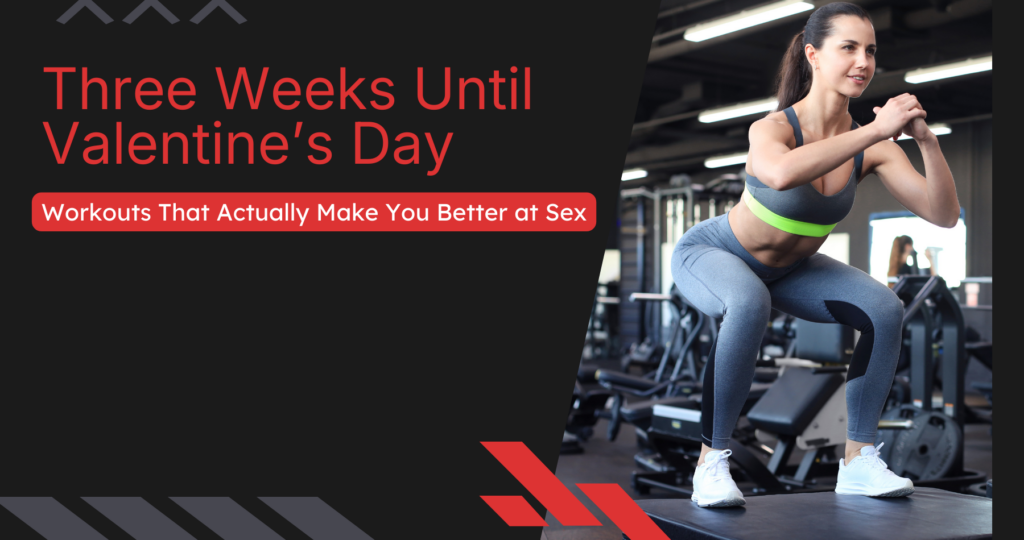
Most workout plans are designed for mirrors, not bedrooms. Big arms and visible abs look impressive, but they do very little if you are winded, shaky, or distracted by discomfort halfway through intimacy.
Christina and I went on a mission trip many years ago. At the time, she was pregnant with our youngest, who is now almost 11. We were helping build a church using concrete block construction, which meant a lot of hauling heavy blocks from the storage yard to the site.
We had two guys with us who were bodybuilders. They worked in security, prisons, bouncers at clubs, places where looking strong had real benefits. When we visited tourist areas, people constantly asked to take pictures with them. They had young women literally hanging from their flexed biceps.
But when it came time to work, they needed more breaks than anyone else.
It was a lot of muscle for show, but not a lot of stamina. You know what Christina had? A decade of carrying babies around.
I still remember them sitting in the shade, drinking water, looking embarrassed that they needed a break while my very pregnant wife walked by carrying a concrete block in each arm with energy to spare after working the same amount of time that they did. This was about stamina, not beating a personal record for a single rep.
Sex works the same way. It rewards a different kind of fitness:
- Hip strength
- Core stability
- Endurance
- Breath control
- The ability to hold and move your body intentionally
This is especially true if you enjoy longer, slower, multi-hour sessions – my favorite kind, especially on a day like Valentine’s Day.
If you want to feel more capable and confident by then, train for what actually gets used.
So, if you want to gear up for Valentine’s Day (and every day after that), below is your homework. One section for husbands, one for wives. There is overlap, because bodies are bodies. The emphasis is just different because we each tend to move differently during sex.
Homework for Husbands
Goal: thrust endurance, position stability, and staying mentally present instead of focusing on fatigue or burning muscles
You will do all of these each workout day.
1. Hip Thrusts or Glute Bridges
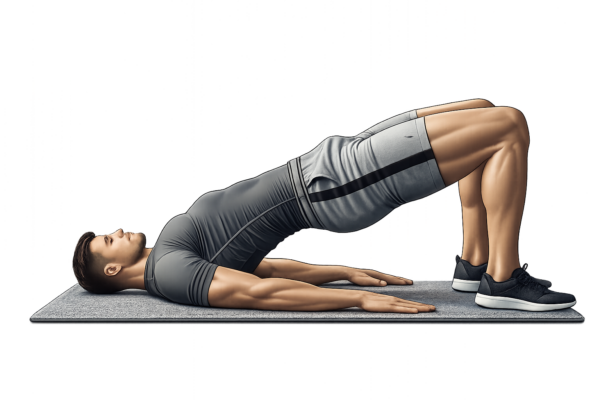
100 reps total
Builds glute strength, hip extension power, and endurance where it actually matters during sex.
During thrusting, the primary driver of movement should be hip extension, not the lower back. The gluteus maximus (the big muscle in your butt) is the largest and most powerful muscle in the body, and it is designed to repeatedly extend the hips under load. When the glutes are weak or fatigue quickly, the body compensates by overusing the lower back and hamstrings. That leads to burning, loss of rhythm, and needing to stop sooner than you want.
Strong glutes allow you to:
- Generate thrusting power without straining your spine
- Maintain speed and depth without losing control
- Sustain movement for longer periods with less fatigue
Glute bridges and hip thrusts train repeated hip extension with minimal spinal movement, which closely matches how the body should move during sex. This reduces unnecessary tension and improves efficiency, meaning you can do more work with less effort.
These exercises also improve pelvic stability, which plays a role in thrust precision and control. Better stability means smoother movement rather than jerky or rushed thrusting, which most people find more enjoyable and easier to stay connected during, because if you don’t have control, it can lead to some uncomfortable situations.
Over time, stronger glutes also improve blood flow and muscular endurance in the pelvic region, which supports erections and helps delay fatigue-related loss of control.
Helps in:
- Missionary, where sustained hip extension and body control are required
- Doggy-style, where glute endurance directly limits how long and how powerfully you can thrust
- Any position where you are doing the thrusting and setting the rhythm
2. Planks
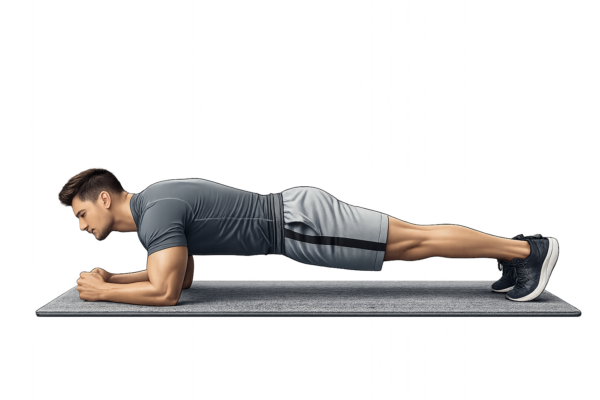
3 minutes total
Builds deep core stability, endurance, and control so your body works as a single, coordinated unit instead of collapsing under load.
During sex, especially in positions like missionary, your core is responsible for transferring force from your hips through your upper body. When the core is weak or fatigues quickly, energy leaks out. You start shaking, dumping weight onto your wife, or bracing awkwardly through your shoulders and neck.
Planks train the deep stabilizing muscles of the core, including the transverse abdominis and deeper spinal stabilizers. These muscles are not about visible abs. They are about holding tension steadily over time while breathing normally.
Strong core stability allows you to:
- Hold yourself up without locking your arms or sagging
- Maintain consistent rhythm instead of rushing or stopping
- Move your hips independently of your upper body
Improved core stability reduces unnecessary tension and helps regulate breathing under effort. This directly impacts orgasm control, because loss of control often happens when breathing becomes shallow and the body tightens globally instead of staying coordinated.
Helps in:
- Missionary, where you are supporting body weight while thrusting
- Any position where you need to stay elevated, stable, and controlled without collapsing
3. Push-Ups
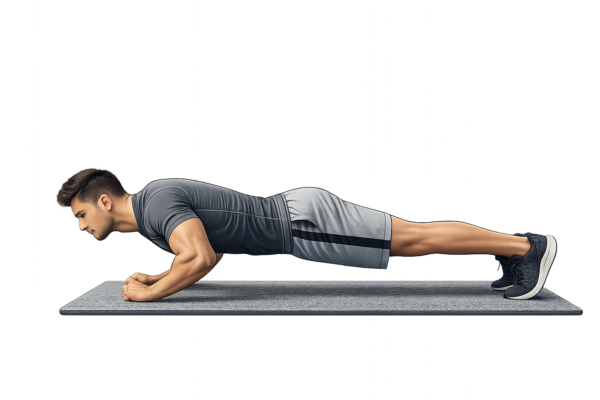
100 reps total
Builds upper-body endurance and joint stability so you can support your weight comfortably without tension or collapse.
During sex, especially in missionary or leaning positions, your arms are not just pushing. They are holding, stabilizing, and adjusting under sustained load. When the chest, shoulders, and triceps fatigue, the body compensates by locking the elbows, shrugging the shoulders, or shifting weight downward. That often results in discomfort for your wife and increased strain in your neck and lower back.
Push-ups train endurance under partial load, which is exactly what these positions require. Rather than max strength, this builds the ability to maintain steady tension for extended periods while still moving smoothly.
Push-ups strengthen:
- The triceps, which control elbow extension and prevent joint locking
- The shoulders, which stabilize the upper body during movement
- The chest, which helps distribute load evenly instead of collapsing inward
This allows you to:
- Stay elevated without dumping weight
- Make small positional adjustments without breaking rhythm
- Maintain posture and breathing under effort
Because push-ups also require coordinated breathing under tension, they indirectly support better pacing and control. When the upper body is stable and not straining, the nervous system stays calmer, which helps delay fatigue and loss of control.
Helps in:
- Missionary, where you are supporting body weight while thrusting
- Standing or leaning positions where arm endurance limits how long you can stay engaged
4. Bulgarian Split Squats
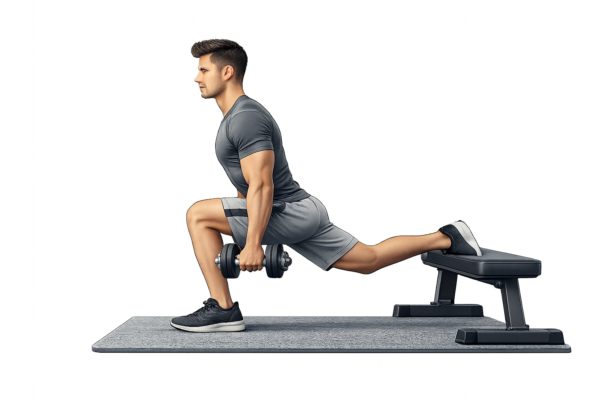
100 reps total (50 per side)
Builds single-leg strength, balance, and hip drive so you can move powerfully and stay stable when your weight is uneven.
Sex is rarely symmetrical. Beds shift. Legs are staggered. One side of your body often does more work than the other. When your legs are not conditioned for that, fatigue shows up quickly as loss of speed, reduced thrust depth, or awkward adjustments that break rhythm.
Bulgarian split squats train the body to produce force through one leg at a time while maintaining balance and control. This directly translates to sexual positions where one leg is forward, braced, or bearing more load than the other.
This exercise strengthens:
- The glutes and quads of the working leg, which drive thrust power
- The hip stabilizers, which keep the pelvis steady during movement
- The nervous system’s ability to coordinate balance under load
This allows you to:
- Maintain thrust speed and intensity even when your stance is uneven
- Shift angles smoothly without stopping or resetting
- Stay confident and grounded instead of feeling off-balance or rushed
Because Bulgarian split squats demand control under fatigue, they also improve movement efficiency, meaning you can do more work with less wasted effort. That directly supports longer sessions and better pacing.
Helps in:
- Bed-based positions where one leg is doing more work
- Asymmetrical or staggered stances that require balance, drive, and control
5. Kettlebell Swings or Interval Running
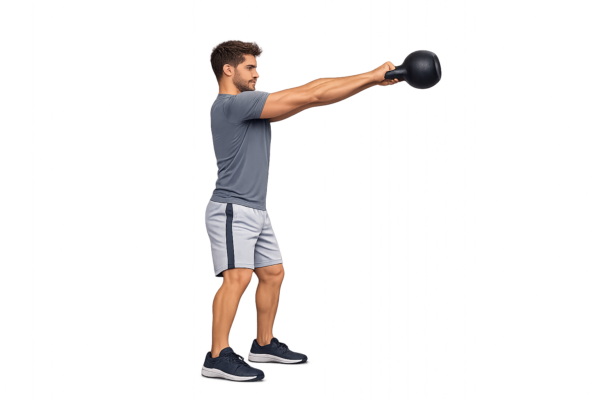
5–10 minutes
Builds explosive hip power, cardiovascular recovery, and breath control so you can move with speed without burning out.
Sex is not steady-state cardio. It is burst effort followed by recovery, repeated over and over. You push harder, slow down, regain control, then ramp back up again. When conditioning is poor, those bursts feel overwhelming, breathing becomes shallow, and control disappears quickly.
Kettlebell swings are especially effective because they train powerful hip extension under elevated heart rate, which closely mirrors thrusting mechanics. The hips drive the movement explosively, then relax and reload. This builds speed without tension.
Interval running trains the other half of the equation: recovery. Your heart rate rises quickly, then you actively bring it back down while still moving. This teaches your nervous system to calm itself under stress, which directly impacts stamina and orgasm control.
This type of conditioning:
- Improves oxygen delivery to working muscles
- Trains faster heart rate recovery between efforts
- Reinforces relaxed breathing under exertion
This allows you to:
- Thrust with speed without immediately fatiguing
- Pause, slow down, and re-engage without losing momentum
- Stay mentally present instead of overwhelmed by exertion
How to do it:
- Kettlebell swings: short sets with brief rests.
- Ladder style works well
- Focus on explosive hip drive, not arm lift.
- Interval running: run hard for 30–60 seconds, walk for 1–2 minutes, repeat.
- Focus on regaining calm breathing during the walk.
Helps in:
- All positions
- Especially longer encounters where stamina, speed changes, and recovery matter
Homework for Wives
Goal: control, endurance, and confidence in movement
You will also do all of these each workout day.
1. Squats
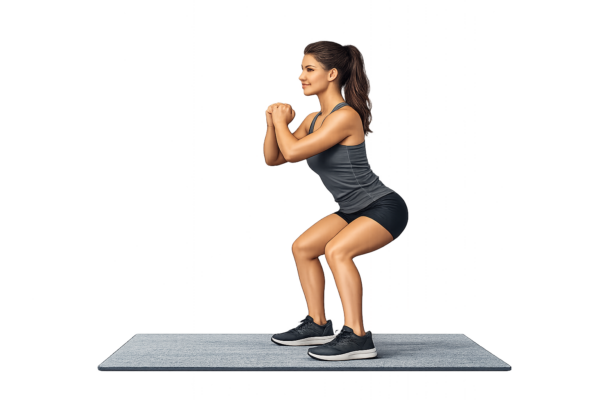
100 reps total
Builds glute and quad strength so she can stay lifted, mobile, and comfortable during positions that require sustained leg engagement.
For many women, positions on top or semi-squatting positions place a continuous load on the legs, hips, and knees. When leg strength fades, discomfort shows up quickly as burning thighs, knee strain, or the need to stop or shift positions sooner than desired.
Squats train the large muscles of the lower body to support her weight repeatedly and for longer periods, which directly improves endurance in these positions. Strong glutes also help keep the pelvis stable, reducing strain on the lower back and allowing movement to feel smoother and more controlled.
Squats improve:
- Blood flow to the hips and pelvic region
- Muscular endurance in the thighs and glutes
- Joint stability in the knees and hips
This combination allows her to:
- Stay on top longer without fatigue or discomfort
- Control depth and rhythm instead of rushing or bouncing
- Remain relaxed and present instead of distracted by burning muscles
Because squats involve coordinated breathing and full-body engagement, they also support better body awareness and confidence during movement, which many women find directly improves enjoyment and connection.
Helps in:
- Woman-on-top positions that require sustained leg engagement
- Reverse cowgirl, where control and endurance matter more than speed
- Hovering or squatting positions where leg fatigue often limits enjoyment
2. Hip Thrusts or Glute Bridges
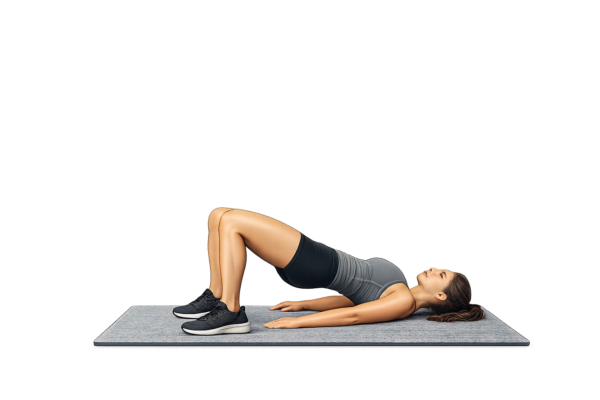
100 reps total
Builds glute strength, pelvic stability, and control over hip movement, allowing her to move intentionally instead of relying on momentum or bouncing.
For many women, positions on top or from behind place repeated demands on the hips and glutes to lift, lower, and subtly adjust pelvic angle. When those muscles fatigue, movement often becomes less controlled, more tiring, or uncomfortable, especially in the lower back or hips.
Hip thrusts and glute bridges train the muscles responsible for lifting and stabilizing the pelvis, which allows her to:
- Control the rhythm and depth of movement
- Maintain comfort without straining the lower back
- Adjust angles smoothly to increase pleasure
Stronger glutes reduce reliance on the lower back and hip flexors, which are not designed for sustained repetitive motion. This improves endurance and reduces tension, making it easier to stay relaxed and present.
These exercises also improve pelvic awareness, helping her consciously engage and release muscles rather than holding unnecessary tension. That awareness often translates into better sensation, greater comfort, and more confidence in movement.
Helps in:
- On-top positions where pelvic control and endurance shape the experience
- From-behind positions where hip stability and sustained engagement matter
3. Bulgarian Split Squats
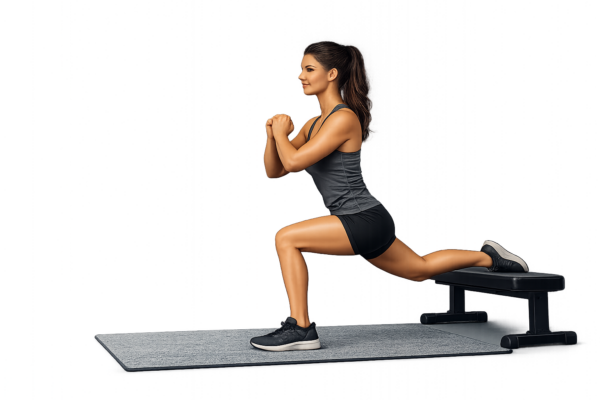
50 reps total (25 per side)
Builds single-leg strength and hip stability so she can stay lifted, open, and engaged when her weight is unevenly distributed.
Many positions on top or semi-upright naturally shift more load to one leg or one hip at a time. When those muscles fatigue, movement often becomes smaller, rhythm breaks down, or she has to stop sooner than she wants, not because desire is gone, but because her body is done.
Bulgarian split squats train her body to:
- Sustain movement longer without burning out
- Maintain control and rhythm when one leg is doing more work
- Stay confident and comfortable instead of worrying about balance
This exercise strengthens the glutes and stabilizing muscles around the hips and pelvis while teaching the body to remain controlled under uneven load. That means less strain, less distraction, and more freedom to move intuitively.
When balance and stability are no longer a concern, attention naturally shifts away from managing effort and toward sensation, connection, and enjoyment.
Helps in:
- On-top positions when one knee or foot is bearing more weight
- Upright or semi-upright positions where balance and endurance matter
4. Sit-Ups (Slow and Controlled)
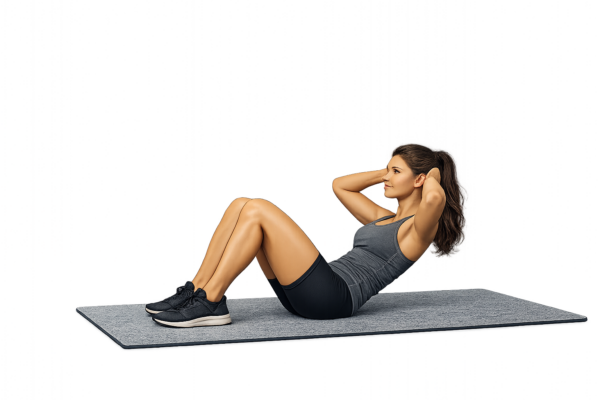
100 reps total
Builds core control without rigidity, allowing her to move, breathe, and stay engaged without bracing or collapsing.
For many women, positions on top or side-lying positions require the core to stay lightly engaged while the body continues to move fluidly. When the core is weak or overly tense, she may either collapse through the torso or brace too hard, which interferes with breathing, comfort, and sensation.
Slow, controlled sit-ups train the core to engage and release smoothly, rather than locking on. This supports:
- Upright posture without stiffness
- Easier breathing during movement
- Subtle pelvic and torso adjustments without strain
This type of core work improves coordination between the abdominal muscles, diaphragm, and pelvic floor. That coordination helps her stay relaxed and responsive instead of tense or distracted by effort.
When the core can support movement without dominating it, she can:
- Stay upright longer without fatigue
- Move with intention rather than effort
- Remain present and connected to sensation
Helps in:
- On-top positions where posture and breathing matter
- Side-lying positions where gentle core engagement supports comfort and movement
5. Pelvic Floor Control Exercises
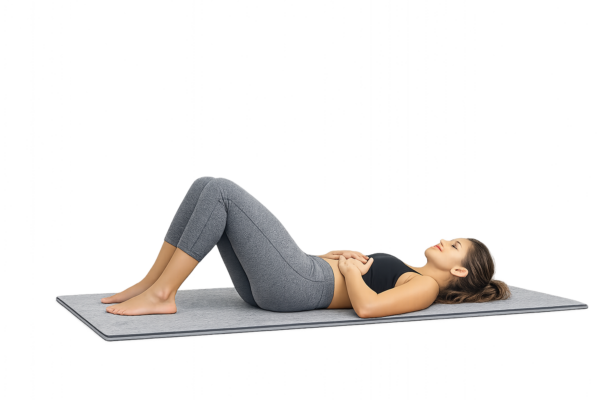
5–10 minutes total
Builds awareness, control, and relaxation of the pelvic floor so she can engage when it helps and relax when it matters.
For many women, pelvic floor issues during sex are not about weakness, but about lack of control. Muscles may stay partially clenched without realizing it, which can reduce sensation, increase discomfort, or make it harder to relax into pleasure.
Effective pelvic floor training is not about constant tightening. It is about learning to engage, release, and coordinate these muscles with breathing and movement.
These exercises help her:
- Reduce unnecessary tension that interferes with comfort
- Improve endurance without fatigue or soreness
- Increase awareness of subtle pelvic movement and sensation
Coordinated pelvic floor control supports blood flow, nerve sensitivity, and muscular endurance in the pelvic region. Just as importantly, learning to fully relax the pelvic floor allows deeper comfort and more responsive sensation.
Do the following:
Basic Kegels
- Gently contract the muscles you would use to stop urine flow
- Hold for 3–5 seconds
- Fully relax for 5 seconds
- Repeat 10–15 times
Pulse Kegels
- Quickly contract and release
- 20–30 controlled pulses
Relaxation Breathing
- Inhale deeply and consciously relax the pelvic floor
- Exhale slowly, allowing the muscles to soften
- 5–10 slow breaths
This combination trains both strength and release, which is essential for comfort, endurance, and pleasure.
When the pelvic floor can engage without gripping and relax without effort, she is less distracted by discomfort and more able to stay present in her body.
Helps in:
- All penetrative positions where comfort, sensation, and control matter
Working Out Together Can Increase Intimacy
Working out together increases intimacy because it changes how your bodies and nervous systems relate to each other, not because you burn calories side by side.
When couples move together, even briefly, several things happen:
- Stress hormones drop
- Blood flow increases
- Bodies shift out of “task mode” and into physical awareness
- Partners see each other engaging their bodies intentionally
That last point matters more than people realize.
Seeing your spouse move with strength, control, or effort often activates attraction in ways conversation does not. It is not about aesthetics. It is about capability, vitality, and presence.
From a relational standpoint, shared movement:
- reduces the feeling that one partner is “doing all the work” around intimacy
- builds a sense of teamwork rather than pressure
- makes sex feel like a continuation of connection, not a separate event
Even short, low-pressure movement together can soften emotional distance and make physical closeness feel more natural later.
Strength and Cardio Training Improve Erections and Orgasm
This is not just motivational. There is real physiology underneath it.
For Men: Erections and Stamina
Erections depend heavily on:
- blood flow
- nervous system regulation
- the ability to stay relaxed under effort
Strength training and interval-style cardio improve vascular health, meaning blood moves more efficiently through the body, including to the penis. Better circulation supports firmer, more reliable erections and improves recovery between erections during longer sessions.
Training that emphasizes hips, core, and breath control also reduces excessive tension. Many erection issues are not about desire, but about the body being stuck in a stressed or fatigued state.
Men who train consistently often notice:
- stronger erections
- better stamina
- improved control over arousal and climax
For Women: Orgasm, Sensation, and Comfort
Female orgasm is strongly influenced by:
- blood flow to the pelvis
- pelvic floor coordination
- the ability to stay relaxed and present
Strength training, especially for the hips and core, improves circulation and neuromuscular awareness in the pelvic region. That supports sensation, responsiveness, and comfort.
Cardio plays an important role as well. Improved cardiovascular fitness enhances blood flow and reduces overall tension, which helps many women move more easily from arousal into orgasm.
Women who engage in regular strength and cardio training often report:
- easier arousal
- stronger or more consistent orgasms
- less discomfort during sex
- greater confidence in movement and positioning
How to Use This for the Next Three Weeks
You do not need a perfect plan, a gym membership, or flawless consistency. What matters is showing up regularly and working with intention.
Every day, do each workout, adjusting reps or weights as needed.
If it’s too hard, split up the reps, drop the weight, or modify in other ways, like incline pushups.
If it’s too easy, then add weight, or pause and flex the targeted muscles in the middle of the movement.
Listen to your body. If something feels strained or painful, scale it back. Consistency beats intensity every time.
Finally, stop training two days before Valentine’s Day. This gives your muscles time to recover, inflammation to drop, and energy levels to rebound. You want to feel rested, strong, and present, not tight or depleted.
The goal is not to arrive perfect.
The goal is to arrive capable, confident, and connected to your body.
The Point
This is not about looking sexy. If that is your goal, you are going to need a longer plan.
This is about being capable.
Strong enough to move with confidence.
Stable enough to last.
Present enough to enjoy your spouse instead of performing for them.
Three weeks from now, Valentine’s Day arrives either way.
You might as well arrive with more energy, more confidence, and a body that actually supports intimacy.
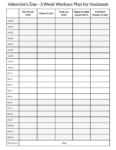
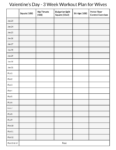
To help with this, I created a workout plan sheet – one for men, one for women, so you can keep track of how many you’ve done.
Want Help Following Through?
A lot of people read posts like this, feel motivated, and fully intend to follow through.
Then life gets busy.
If you want to do this but know you struggle with consistency, accountability, or sticking to a plan once the initial motivation fades, that’s exactly what Pocket Coaching is for.
With Pocket Coaching:
- We set clear, realistic metrics
- I track your progress
- And I check in when you drift or stall or celebrate your wins
I’ll replicate the printout in our coaching platform and you’ll get email or text messages every morning (or whenever you want them) to remind you to do them. You can just reply to the message saying you did it, and it will chart your performance for you. If you miss a day, you’re going to be getting a message from my asking what’s up. Miss a few, and we’re going to make a plan on how to make sure it happens.
You are not left to self-motivate indefinitely. You have someone paying attention and holding you to what you said you wanted.
If having someone in your corner would make the difference between thinking about it and actually doing it, you can learn more about Pocket Coaching here.
Three weeks will pass whether you act or not.
If you want this Valentine’s Day to feel different because you did something different, accountability can help make that happen.
Join Our Community!
Support this ministry and get exclusive access to our private forum, featuring additional resources, live discussions, and a supportive community of like-minded couples.
Learn More & Support Us